Ashoka Home Foods - Building a Digital Home for Homemade Food
Ashoka Home Foods - Building a Digital Home for Homemade Food
Ashoka Home Foods - Building a Digital Home for Homemade Food
Role: Product Designer (UI/UX)
Scope: Customer Website + Admin Management
Duration: ~6 weeks
Status: Live product
Tools: Figma, Lovable, Git hub, Vercel
Role: Product Designer (UI/UX)
Scope: Customer Website + Admin Management
Duration: ~6 weeks
Status: Live product
Tools: Figma, Lovable, Git hub, Vercel
Role: Product Designer (UI/UX)
Scope: Customer Website + Admin Management
Duration: ~6 weeks
Status: Live product
Tools: Figma, Lovable, Git hub, Vercel
How this project started?
How this project started?
How this project started?
Ashoka Home Foods didn’t start as a design problem.
It started as a trust problem.
People love homemade food, but ordering it online often feels uncertain
Who cooked this?
Is it fresh?
Will it arrive on time?
At the same time, the business was managing orders manually, which made scaling difficult.
The goal wasn’t to “make a pretty website.”
It was to create confidence on both sides customers ordering food and admins managing it.
Ashoka Home Foods didn’t start as a design problem.
It started as a trust problem.
People love homemade food, but ordering it online often feels uncertain
Who cooked this?
Is it fresh?
Will it arrive on time?
At the same time, the business was managing orders manually, which made scaling difficult.
The goal wasn’t to “make a pretty website.”
It was to create confidence on both sides customers ordering food and admins managing it.
Ashoka Home Foods didn’t start as a design problem.
It started as a trust problem.
People love homemade food, but ordering it online often feels uncertain
Who cooked this?
Is it fresh?
Will it arrive on time?
At the same time, the business was managing orders manually, which made scaling difficult.
The goal wasn’t to “make a pretty website.”
It was to create confidence on both sides customers ordering food and admins managing it.
What Needed to Work (Before Anything Else)
What Needed to Work (Before Anything Else)
What Needed to Work (Before Anything Else)
Before jumping into UI, I defined three non-negotiables:
1. Customers should feel safe ordering food in under a minute
2. The menu should never feel confusing, even on mobile
3. Admins should manage everything without technical help
Everything I designed later tied back to these points.
Before jumping into UI, I defined three non-negotiables:
1. Customers should feel safe ordering food in under a minute
2. The menu should never feel confusing, even on mobile
3. Admins should manage everything without technical help
Everything I designed later tied back to these points.
Before jumping into UI, I defined three non-negotiables:
1. Customers should feel safe ordering food in under a minute
2. The menu should never feel confusing, even on mobile
3. Admins should manage everything without technical help
Everything I designed later tied back to these points.
Understanding Real Behavior
Understanding Real Behavior
Understanding Real Behavior
Instead of over-researching, I focused on how people actually order food.
What I observed
· Users scan first, read later
· Images influence trust more than copy
· Long checkouts kill momentum
Instead of over-researching, I focused on how people actually order food.
What I observed
· Users scan first, read later
· Images influence trust more than copy
· Long checkouts kill momentum
Instead of over-researching, I focused on how people actually order food.
What I observed
· Users scan first, read later
· Images influence trust more than copy
· Long checkouts kill momentum
On the admin side
· Daily menu updates were painful
· Order tracking happened across WhatsApp and spreadsheets
· Mistakes increased during peak hours
These observations shaped both front-end UX and admin design.
On the admin side
· Daily menu updates were painful
· Order tracking happened across WhatsApp and spreadsheets
· Mistakes increased during peak hours
These observations shaped both front-end UX and admin design.
On the admin side
· Daily menu updates were painful
· Order tracking happened across WhatsApp and spreadsheets
· Mistakes increased during peak hours
These observations shaped both front-end UX and admin design.
Designing the Customer Experience
Designing the Customer Experience
Designing the Customer Experience
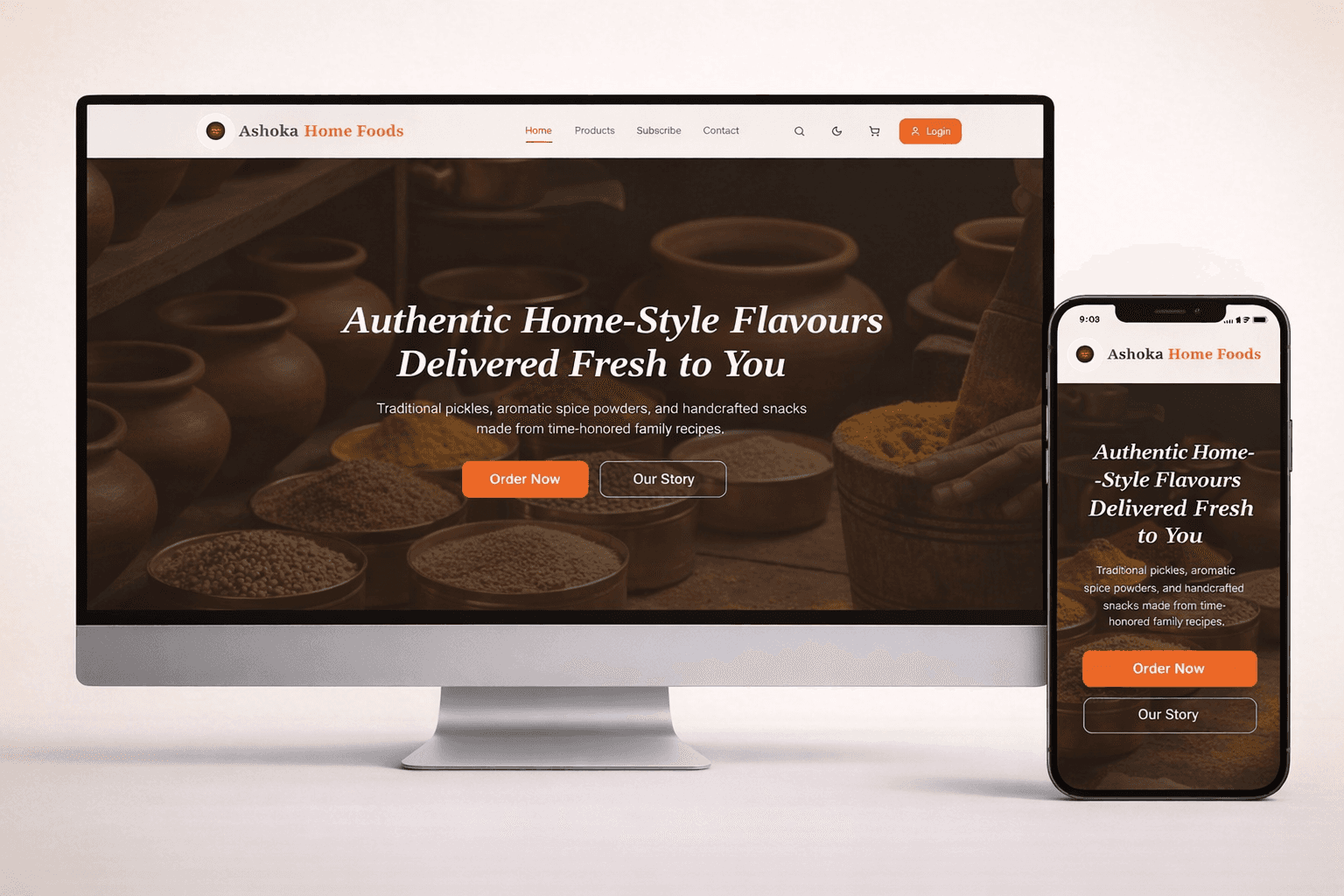
I approached the customer journey like a conversation:
“What’s available today?”
“What does this include?”
“Can I order this quickly?”
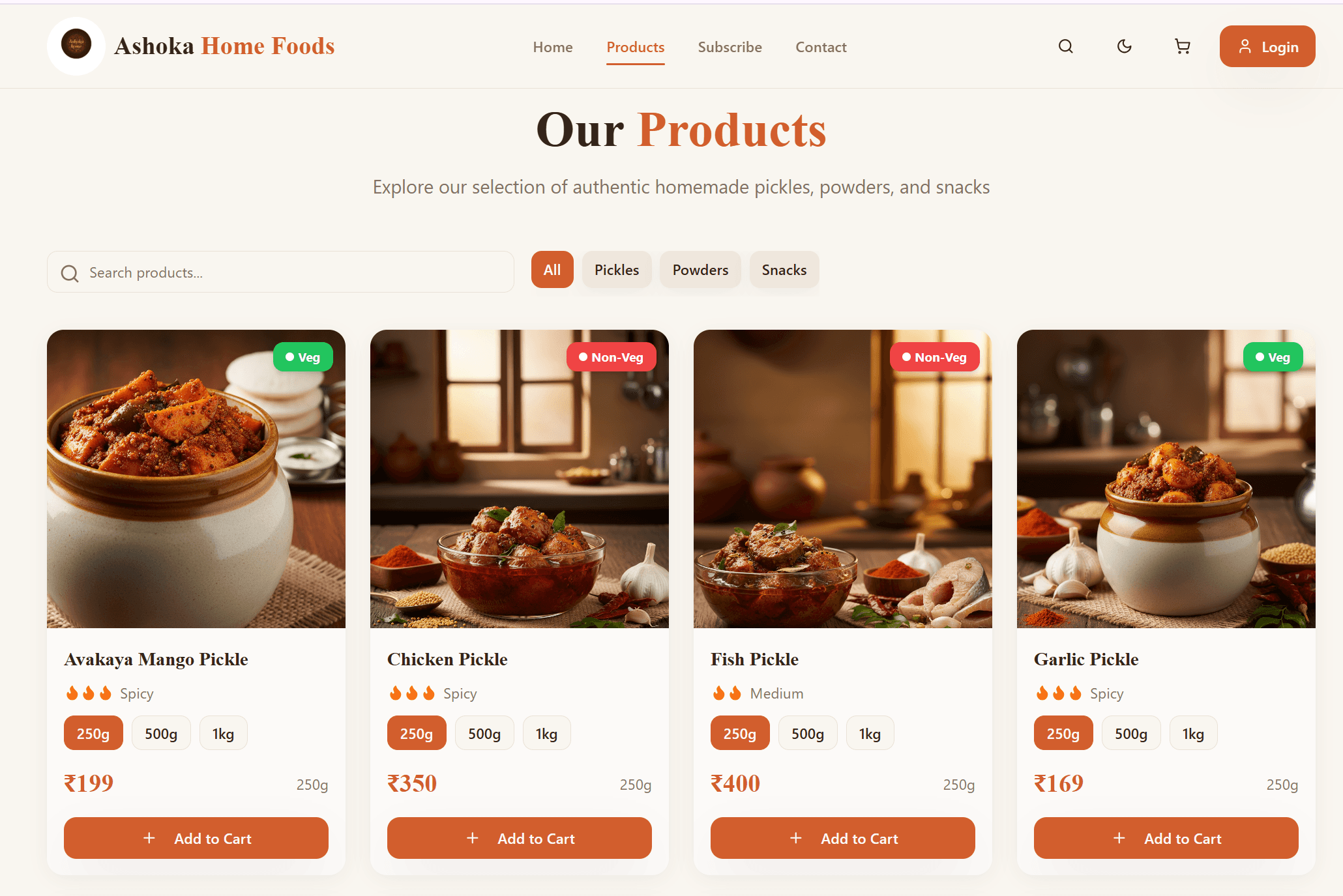
Key decisions
· Category-first navigation instead of long lists
· Product cards that prioritize food imagery and clarity
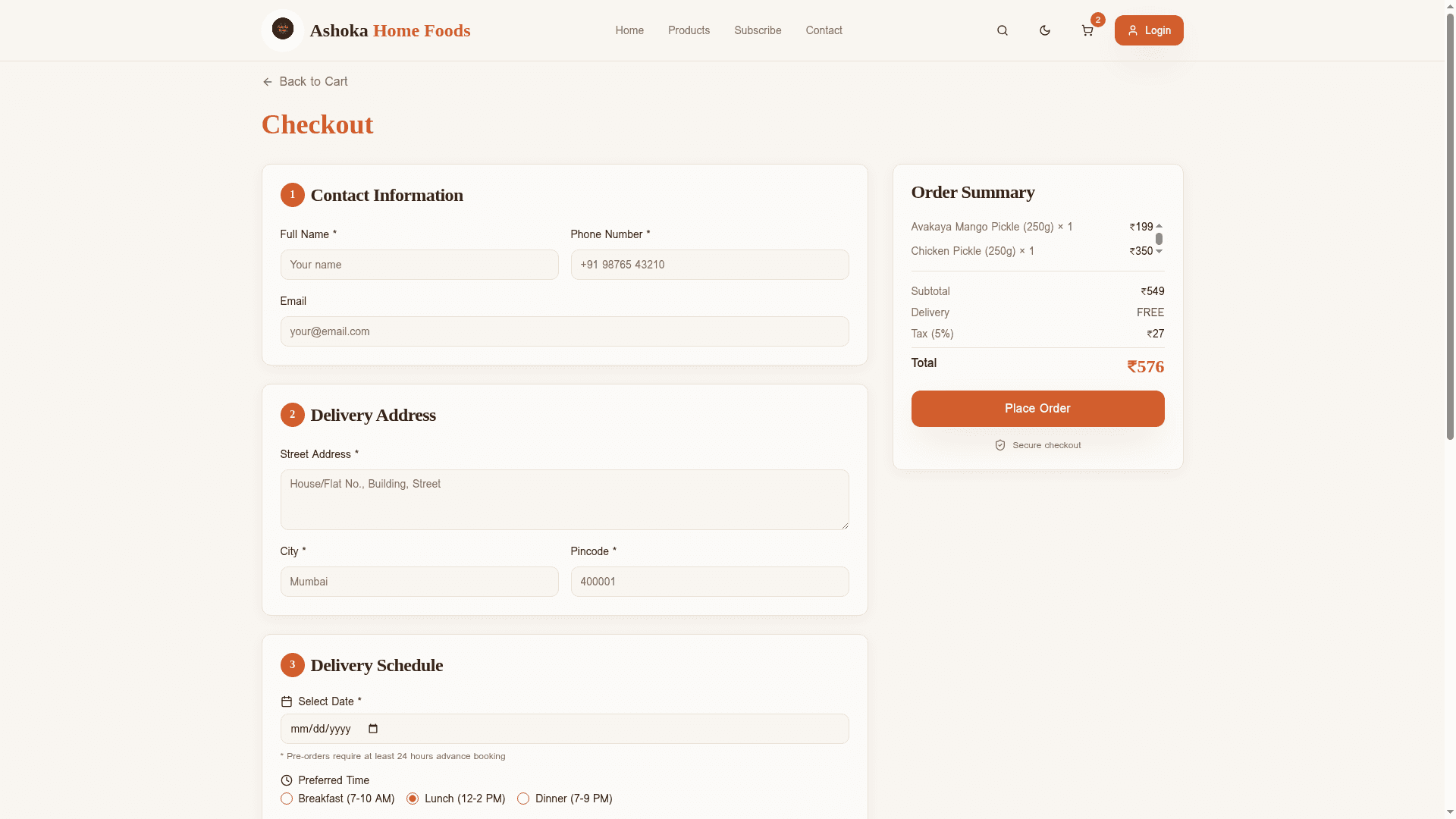
· Minimal distractions during checkout
The interface intentionally feels warm and calm, using earthy colors and spacing to mirror the feeling of homemade food — not fast food.
I approached the customer journey like a conversation:
“What’s available today?”
“What does this include?”
“Can I order this quickly?”
Key decisions
· Category-first navigation instead of long lists
· Product cards that prioritize food imagery and clarity
· Minimal distractions during checkout
The interface intentionally feels warm and calm, using earthy colors and spacing to mirror the feeling of homemade food — not fast food.
I approached the customer journey like a conversation:
“What’s available today?”
“What does this include?”
“Can I order this quickly?”
Key decisions
· Category-first navigation instead of long lists
· Product cards that prioritize food imagery and clarity
· Minimal distractions during checkout
The interface intentionally feels warm and calm, using earthy colors and spacing to mirror the feeling of homemade food — not fast food.
Designing the Admin Experience
Designing the Admin Experience
Designing the Admin Experience
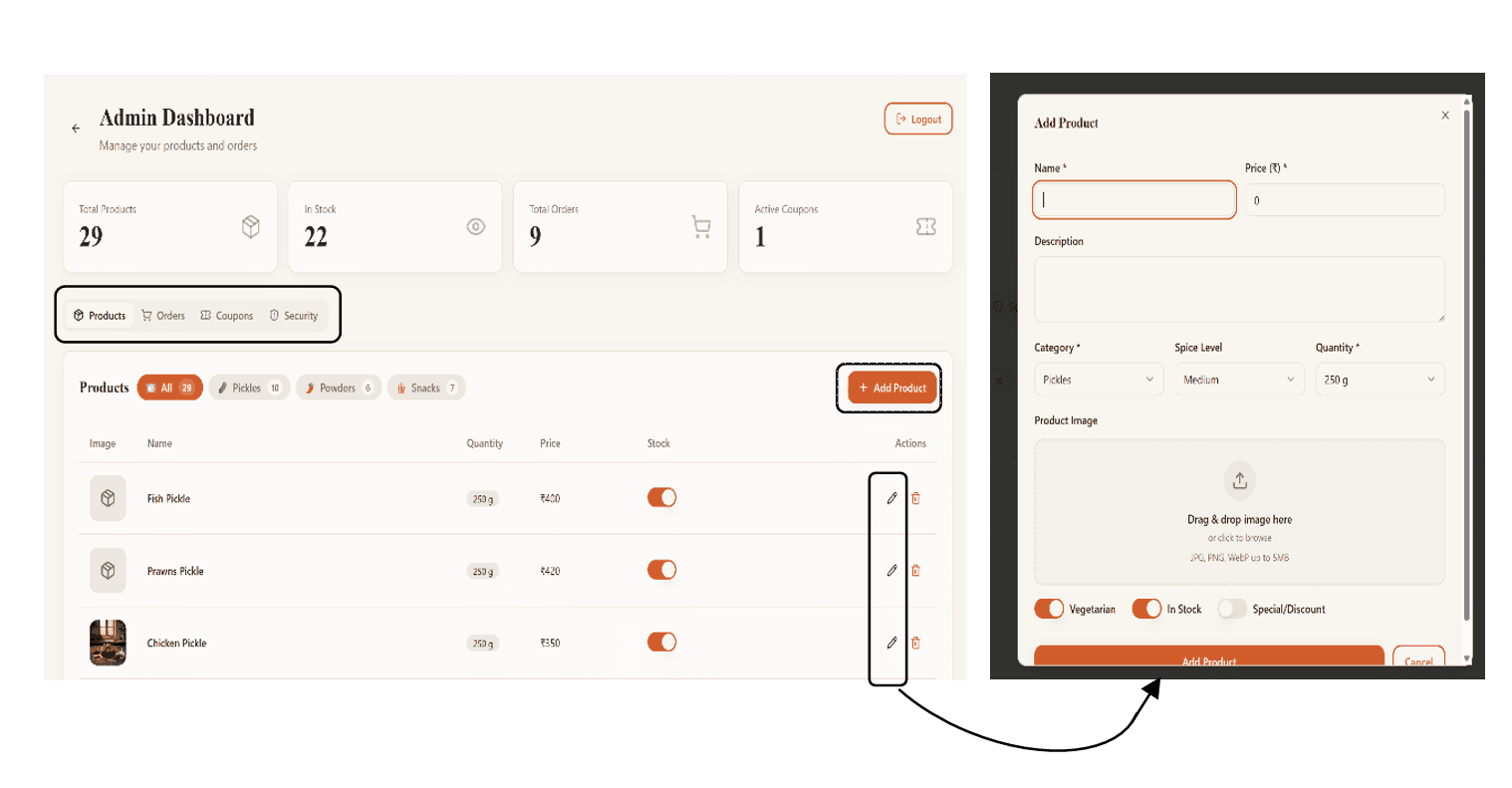
The admin panel was treated as a tool, not a product.
Instead of complex dashboards, I focused on:
· A clear list of orders
· Customer details visible at a glance
· Easy product and availability updates
The admin panel was treated as a tool, not a product.
Instead of complex dashboards, I focused on:
· A clear list of orders
· Customer details visible at a glance
· Easy product and availability updates
The admin panel was treated as a tool, not a product.
Instead of complex dashboards, I focused on:
· A clear list of orders
· Customer details visible at a glance
· Easy product and availability updates
The goal was simple:
Reduce errors and save time during busy hours.
The goal was simple:
Reduce errors and save time during busy hours.
The goal was simple:
Reduce errors and save time during busy hours.
What Was Hard (And Why It Mattered)
What Was Hard (And Why It Mattered)
What Was Hard (And Why It Mattered)
1. Balancing warmth with efficiency
Too much visual design slowed users down.
I iterated multiple times to keep the UI friendly but fast.
2. Making mobile feel effortless
Over 60% of users ordered on mobile.
Every component was tested for thumb reach, readability, and tap targets.
3. Building from zero without patterns
There was no previous system to improve — every decision mattered.
This forced me to think like both a designer and a business owner.
1. Balancing warmth with efficiency
Too much visual design slowed users down.
I iterated multiple times to keep the UI friendly but fast.
2. Making mobile feel effortless
Over 60% of users ordered on mobile.
Every component was tested for thumb reach, readability, and tap targets.
3. Building from zero without patterns
There was no previous system to improve — every decision mattered.
This forced me to think like both a designer and a business owner.
1. Balancing warmth with efficiency
Too much visual design slowed users down.
I iterated multiple times to keep the UI friendly but fast.
2. Making mobile feel effortless
Over 60% of users ordered on mobile.
Every component was tested for thumb reach, readability, and tap targets.
3. Building from zero without patterns
There was no previous system to improve — every decision mattered.
This forced me to think like both a designer and a business owner.
How Everything Fits Together
How Everything Fits Together
How Everything Fits Together
Customer Flow
Landing → Browse → Select → Checkout → Done
Admin Flow
Dashboard → Orders → Inventory → Updates
Both flows were designed independently but tested together to ensure real-world usability.
Customer Flow
Landing → Browse → Select → Checkout → Done
Admin Flow
Dashboard → Orders → Inventory → Updates
Both flows were designed independently but tested together to ensure real-world usability.
Customer Flow
Landing → Browse → Select → Checkout → Done
Admin Flow
Dashboard → Orders → Inventory → Updates
Both flows were designed independently but tested together to ensure real-world usability.
· Fully responsive food ordering website
· Structured product and category system
· Fast, low-friction checkout
· Admin dashboard for orders and inventory
· Analytics tracking to measure behaviour post-launch
· Fully responsive food ordering website
· Structured product and category system
· Fast, low-friction checkout
· Admin dashboard for orders and inventory
· Analytics tracking to measure behaviour post-launch
· Fully responsive food ordering website
· Structured product and category system
· Fast, low-friction checkout
· Admin dashboard for orders and inventory
· Analytics tracking to measure behaviour post-launch
What Changed After Launch?
What Changed After Launch?
What Changed After Launch?
Within the first few weeks:
· ~35% increase in completed orders
· ~25% reduction in cart abandonment
· Users spent ~40% more time browsing the menu
· Admins processed orders ~50% faster with fewer mistakes
These weren’t just UX wins - they directly impacted daily operations.
Within the first few weeks:
· ~35% increase in completed orders
· ~25% reduction in cart abandonment
· Users spent ~40% more time browsing the menu
· Admins processed orders ~50% faster with fewer mistakes
These weren’t just UX wins - they directly impacted daily operations.
Within the first few weeks:
· ~35% increase in completed orders
· ~25% reduction in cart abandonment
· Users spent ~40% more time browsing the menu
· Admins processed orders ~50% faster with fewer mistakes
These weren’t just UX wins - they directly impacted daily operations.
What This Project Taught Me?
What This Project Taught Me?
What This Project Taught Me?
· Trust is a design problem, not just a branding one
· Admin UX is invisible until it’s bad
· Simple flows outperform feature-heavy ones
· Designing from 0→1 forces clarity in every decision
· Trust is a design problem, not just a branding one
· Admin UX is invisible until it’s bad
· Simple flows outperform feature-heavy ones
· Designing from 0→1 forces clarity in every decision
· Trust is a design problem, not just a branding one
· Admin UX is invisible until it’s bad
· Simple flows outperform feature-heavy ones
· Designing from 0→1 forces clarity in every decision
Why This Case Study Belongs in My Portfolio?
Why This Case Study Belongs in My Portfolio?
Why This Case Study Belongs in My Portfolio?
This project reflects how I design in real environments - where time, clarity, and operations matter as much as visuals. It shows my ability to build products from scratch, think beyond screens, and design experiences that work for both users and businesses.
This project reflects how I design in real environments - where time, clarity, and operations matter as much as visuals. It shows my ability to build products from scratch, think beyond screens, and design experiences that work for both users and businesses.
This project reflects how I design in real environments - where time, clarity, and operations matter as much as visuals. It shows my ability to build products from scratch, think beyond screens, and design experiences that work for both users and businesses.